In practice
Six situations, and what the work involved.
Drawn from the record and anonymised here, so that the focus stays on the work rather than the organisation. Each states the capacity in which it was undertaken.
Setting institutional direction across a university
A Canadian research university. Institutional executive appointment. Not a Praxis Global engagement. Current.
The situation
The university is setting its institutional direction over a horizon of several decades. The community affected runs to more than 30,000 students, faculty, staff, alumni and external partners. Responsibility for shaping the strategy, for endorsing it and for giving effect to it sits in different places within the institution.
What had to be worked through
How a strategy moves through executive, collegial and formal governance at once. What evidence informs it, and at what level of confidence. What consultation can actually influence, and how that is stated in advance rather than discovered afterwards. What the institution is committing to, and what each commitment costs in terms of what it forgoes.
The role
The work is led through an institutional executive appointment reporting to the university President. It is not work commissioned through Praxis Global.
What was built
The governance and strategy architecture, designed before the substantive work began: five working groups of some fifty members drawn from students, staff and faculty; a steering committee chaired by the President; a central project office; and a project team of six.
Alongside it, the analytical apparatus the process runs on. Environmental scanning structured across explicit horizons with assumptions named. Strategic choices expressed as commitments with their trade-offs stated. Confidence recorded against each finding and preserved as material moves up through the governance chain. A written record at the close of each phase of what has been committed, what remains open, and who holds each item next.
Where it stands
Underway. The process is designed to progress through the university's academic and corporate governance to final approval.
Governance through substantial organisational growth
A community-owned corporate group. Board appointment. Not a Praxis Global engagement. Current.
The situation
A community-owned corporate group operating a diversified portfolio of businesses. Over the period of the directorship, annual revenue has grown from approximately CAD 1 million to approximately CAD 40 million. A shareholder community and a set of operating businesses have to be both separated and connected: separated so that the businesses can be run, connected so that the community remains the owner in substance as well as in form.
What had to be worked through
Growth creates new governance requirements. The scale of decision a board is being asked to take changes, the information it needs changes, and the relationship between ownership and management has to be restated rather than assumed. Alongside that: how a chief executive is compensated and reviewed, how the board renews its own composition, and how an annual community dividend is supported without compromising the operating businesses.
The role
Founding director. Chair of the CEO compensation committee. Member of the audit and finance, strategy, and board renewal committees. A board appointment, not work commissioned through Praxis Global.
What was built
The group's governance was established at founding and has developed alongside the business. The CEO compensation framework and its annual review were developed and are overseen from the compensation committee. The governance separation between the shareholder community and the operating businesses was strengthened, and supports an annual community dividend.
Where it stands
Continuing. The growth described above is the group's, achieved by its management and its people. What the record supports is that annual revenue grew from approximately CAD 1 million to approximately CAD 40 million during the period of the directorship, and that governance developed alongside the business.
Building a distributed institutional network
A distributed post-secondary education network. Institutional executive appointment. Not a Praxis Global engagement. Completed.
The situation
A pathway into and through post-secondary business education for Indigenous students, spanning secondary schools, colleges, universities and employment. No single institution held the whole pathway. Building it therefore required more than twenty-five independent institutions to participate in a shared arrangement while retaining their own authority and responsibilities.
What had to be worked through
How that arrangement could hold. How Indigenous communities, governments, corporations and philanthropy each participate on their own terms, holding different rights, knowledge and interests. Rightsholders participated on their own terms, and their knowledge shaped the design rather than being consulted after it. Governance and knowledge authority were recognised in how the arrangement was built.
The role
A founding institutional executive appointment within a Canadian business school, holding both a decanal portfolio for Indigenous business education and the directorship of the network. A team of seven was recruited and led. Not work commissioned through Praxis Global.
What was built
The network itself, across more than twenty-five post-secondary institutions, together with partnerships spanning Indigenous communities, governments, corporations and philanthropy. An integrated pathway linking secondary schools, colleges, universities and employment. The team, the relationships and the funding architecture that sustained it.
What resulted
More than CAD 3 million was raised in scholarships and endowed bursaries during the period. The partnership work received national recognition from the Government of Canada.
Building and operating an executive education business
An executive education business within a Canadian business school. Institutional executive appointment. Not a Praxis Global engagement. Completed.
Design, delivery, measurement and commercial accountability held in one place.
An executive education business inside a business school, serving clients across government, healthcare, industry and professional services. The work ranged from single workshops to multi-year programmes, including a customised graduate diploma and master's programme delivered on client sites, and a corporate university management series built over several years.
The role carried full profit and loss accountability for approximately CAD 2 million in annual revenue, a team of fourteen, and fifteen to twenty custom programmes a year. An institutional executive appointment, not work commissioned through Praxis Global.
What had to be worked through was the relationship between four things usually held by different people: what a client actually needs, how a programme is designed, how it is delivered, and how anyone establishes afterwards whether it worked. The answer took the form of two written methodologies, the Integrated Consulting Methodology and the Integrated Learning Methodology, both of which specify measurement at the outset rather than at the end.
Both methodologies remain the basis on which the practice works.
Turning expert knowledge into an enterprise
Several expert-practice and methodology commercialisation engagements. Praxis Global engagements. A recurring situation rather than a single client.
Expertise held by one person has to become something an organisation can run.
The recurring situation is that a methodology, a body of research or an expert practice works, and works because of the person who holds it. Making it into an enterprise means settling the proposition, the operating model, ownership, product architecture, route to market and the relationship with capital, so that it can operate without them.
Four engagements illustrate it. An established differentiation framework taken from workshop delivery into a commercial structure, with product architecture across price tiers, a publishing route and a digital assessment path. A thinking and capability programme codified, packaged and taken to market, reaching CAD 100,000 in first corporate deployment revenue. A proprietary matching methodology packaged into a product suite, deployed in institutional settings, and merged with a second venture into a single commercial entity. And an expert practice taken to naming, value proposition, identity, an investor document through several review cycles, and the operating scaffolding of entity structure and advisory cadence, with investor conversations live.
Two of the four are current. The others have reached the outcomes described.
Structuring a shared infrastructure opportunity
A shared infrastructure development partnership. Praxis Global engagement. Current.
Two owners, one asset, and a set of questions that cannot be answered separately.
Two organisations are considering the development of a shared infrastructure asset. Strategy, ownership, technical feasibility, partnership and capital have to be worked through together, because decisions in one affect the others: the ownership model depends on what is technically viable, and the funding pathway depends on both.
The engagement covers facilitation of the partnership itself, development of the ownership model across two owners, technical scenario framing, pre-feasibility coordination, and the funding pathway.
The work is underway. Nothing has been built, financed or committed.
Record
The evidence behind these situations.
The record sets out the positions and appointments held by the principal, named, alongside work commissioned through Praxis Global, and keeps the two apart.
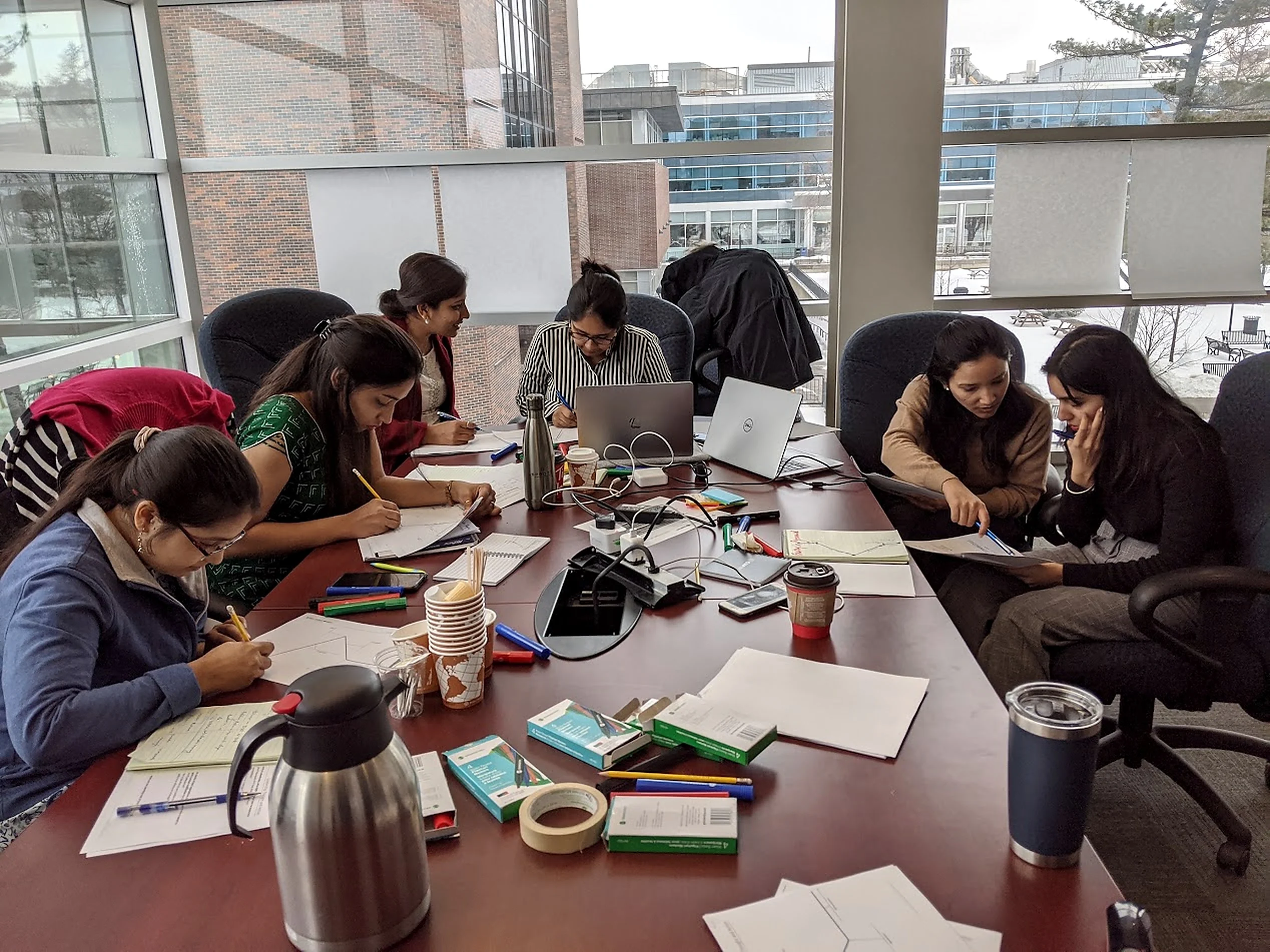
Working session, executive programme.